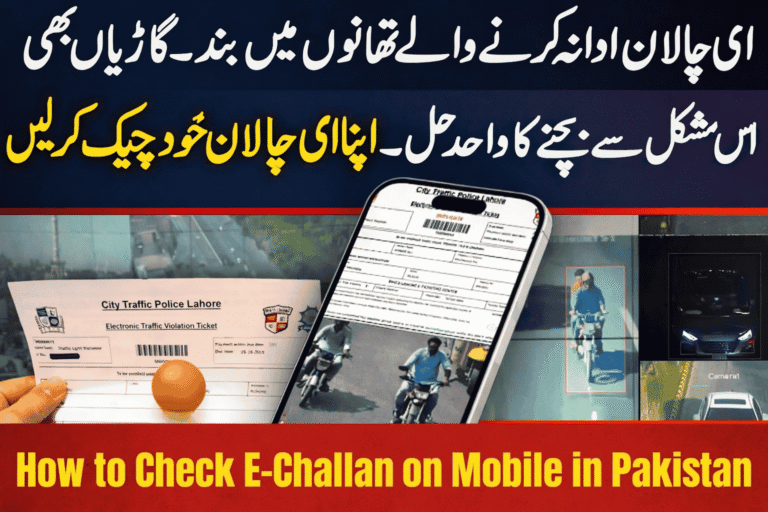
E-Challan Receipt Download & Verification Online – Complete Guide 2026
Got a text message about a traffic violation? Before you panic or ignore it, here’s what you need to know. That SMS could be legitimate, or it might be one of those scam messages that cost people thousands of rupees every month.
The digital traffic system in Pakistan has completely changed how fines work. Safe City cameras are watching every signal, every speed limit, and every lane change across major cities. When you violate a rule, the system generates an electronic challan instantly, and that’s where your responsibility begins. Understanding how to properly verify and manage your traffic fines keeps you safe from both legitimate penalties and elaborate scams targeting uninformed drivers.
In 2026, downloading and verifying your e-challan receipt isn’t optional anymore. It’s your proof of payment, your shield against duplicate fines, and your only protection if disputes arise later. Let me walk you through everything that matters.
Understanding Pakistan’s E-Challan System in 2026
Think back to ten years ago when traffic wardens handed you paper challans on the roadside. That world is gone. Now, sophisticated camera networks capture violations automatically, and the entire process happens digitally without anyone pulling you over.
The technology behind this system is impressive. Automatic Number Plate Recognition reads your registration in milliseconds, speed sensors calculate exact velocities, and AI algorithms even detect if you’re using your phone while driving. Once a violation registers, the system links it to your vehicle’s record and generates an official challan.
Who’s watching your vehicle?
- Punjab Safe Cities Authority monitoring major cities
- Islamabad Traffic Police covering the capital
- Sindh Traffic Police tracking Karachi routes
- Motorway Police scanning highways
- Provincial traffic departments in KPK and Balochistan
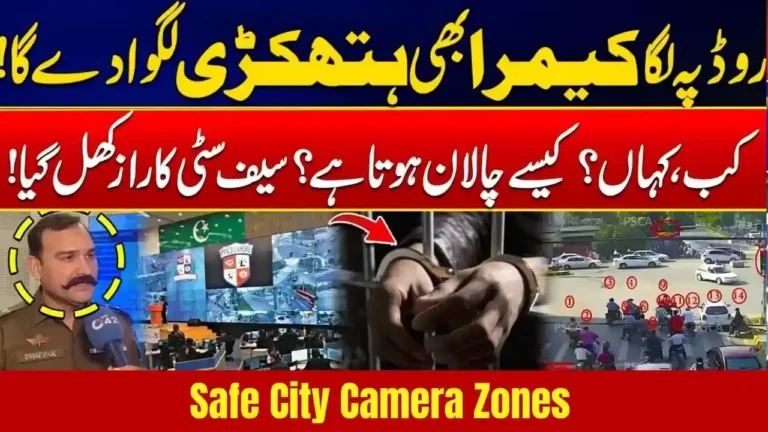
Each authority operates its own portal, but the verification process remains similar across platforms. For those wondering about where cameras are positioned throughout Pakistan, knowing high-risk zones helps maintain violation-free records.
Why Verification Matters More Than You Think
Last month, a friend paid 15,000 rupees for a challan that never existed. The scammers sent a professional-looking SMS with a fake payment link, and he clicked without verifying. Stories like this happen daily across Pakistan.
Here’s the truth about unverified challans. Without proper verification, you can’t distinguish between legitimate traffic department notices and sophisticated phishing attempts. Scammers know people fear traffic fines, and they exploit that fear ruthlessly.
| Verification Benefits | What You Get |
|---|---|
| Authenticity Check | Confirms challan is real, not fake |
| Payment Proof | Official receipt for your records |
| Dispute Protection | Evidence if challenged later |
| Penalty Prevention | Avoid vehicle registration blocks |
| Record Accuracy | Track your complete driving history |
Verifying also protects you from clerical errors. Sometimes the system captures wrong number plates or assigns violations to incorrect vehicles. Without verification, you’d pay for mistakes you never made.
Step-by-Step E-Challan Verification Process
Verification takes less time than brewing your morning tea. The process is identical whether you’re checking a speeding ticket or a signal violation.
Start by opening the official portal. Don’t use random websites from Google results. Go directly to your province’s traffic police website or the PSCA portal if you’re in Punjab. Bookmark the correct URL because you’ll need it repeatedly.
Enter your vehicle registration number. Type it exactly as it appears on your number plate. Even a single wrong character will show no results, making you think the challan is fake when it’s actually real.
Add additional details if requested. Some portals ask for your CNIC number or the specific challan ID if you have it. This extra layer confirms you’re the vehicle owner.
Review the violation details carefully. The system displays everything including when and where the violation occurred, what traffic rule you broke, the exact time stamp, and the fine amount. Understanding how e-challan cameras actually work in Pakistan helps you comprehend the accuracy of these automated systems.
Check payment status immediately. The portal shows whether the challan is paid, unpaid, or overdue. Overdue means penalties are already adding up, and your vehicle might face registration issues soon.
If nothing appears when you search, either the challan doesn’t exist in the system yet (new violations take 24-48 hours to register), or the message you received was a scam. Never trust challan notifications that don’t verify on official portals.
Downloading Your Official E-Challan Receipt
Once you’ve paid your fine, getting the receipt is crucial. This digital document serves as legal proof that you settled the violation, and you’ll need it more often than you’d expect.
Post-payment waiting period matters. After paying through banking apps or ATMs, the system needs time to sync. Most receipts become available within 24 hours, but during peak times, it might stretch to 72 hours. Don’t panic if your receipt isn’t immediately downloadable.
Access the download section. Return to the same portal where you verified the challan. Look for options like “Download Receipt,” “Print Challan,” or “Payment History.” The exact wording varies by province.
Save multiple copies. Download the PDF, save it to your phone, email it to yourself, and print a physical copy. Losing your receipt means proving payment becomes unnecessarily complicated later.
The official receipt contains critical information including your unique receipt number, complete vehicle details, the specific violation description, amount paid with date and time, and the issuing authority’s official seal. Missing any of these elements means the receipt might not be genuine.
Every Payment Method Available in 2026
Pakistan’s e-challan system accepts payments through multiple channels, making it convenient regardless of where you are or what banking services you use.
Digital banking leads the pack. Mobile apps from major banks now have dedicated e-challan payment sections. Open your banking app, find the bill payment category, select traffic challan or e-challan, enter your vehicle number, and pay instantly. The transaction reflects in the system within hours.
Mobile wallets simplified everything. JazzCash and Easypaisa users can pay directly through their apps without needing bank accounts. The process mirrors banking apps but with simpler interfaces designed for non-technical users.
ATM payments remain popular. Visit any bank’s ATM, select bill payment, choose e-challan from the government payments section, input your vehicle registration, and confirm payment. Keep the printed receipt until the online system updates.
For those comfortable with traditional methods, visiting bank branches works perfectly. Hand over your challan details to the teller, make the payment, and collect your receipt. It’s slower than digital methods but provides face-to-face confirmation.
Traffic police facilitation centers across major cities also accept cash payments. This option suits people unfamiliar with technology or those who prefer human interaction for financial transactions. Before paying anything, always cross-reference the official traffic challan fine list for Pakistan to ensure you’re being charged correctly.
| Payment Channel | Processing Time | Best For |
|---|---|---|
| Mobile Banking Apps | Instant to 6 hours | Tech-savvy users |
| Mobile Wallets | Instant to 12 hours | Quick payments |
| ATM Payments | 12 to 24 hours | After-hours needs |
| Bank Branches | 24 to 48 hours | Traditional users |
| Police Centers | 24 to 72 hours | Cash-only users |
Most Common Violations Triggering E-Challans
Understanding what gets you fined helps prevent future violations. These aren’t arbitrary rules; they’re safety measures that save lives daily.
Speeding dominates the list. Camera-based speed detection has become incredibly accurate. Even 5 kilometers above the limit triggers automatic challans on monitored roads. The fines scale with how much you exceeded the limit.
Signal jumping costs you. Red light cameras at major intersections capture violations with timestamp precision. The system even records vehicles that enter the intersection on yellow when they should have stopped.
Helmet violations for bikers never go ignored. Facial recognition technology now detects whether motorcycle riders wear helmets. The system is smart enough to differentiate between proper helmet use and helmets hanging on handlebars.
Seat belt enforcement went digital. Cameras equipped with AI can spot drivers without seat belts, even in moving traffic. Front and rear seat passengers are increasingly monitored in major cities.
Additional violations include wrong-side driving, illegal parking in no-stopping zones, lane violations on highways, using mobile phones while driving, and having modified or fancy number plates without proper registration. Each violation carries specific fines that authorities update annually.
Troubleshooting Receipt Download Problems
Technology isn’t perfect, and e-challan systems occasionally frustrate users with technical glitches or delayed updates.
Receipt shows “not available” after payment. This is the most common complaint. The solution is patience combined with verification. Wait 24-48 hours, then check again. If three days pass without receipt availability, contact the helpline with your payment proof.
Payment confirmation received but system shows unpaid. Bank and traffic police systems sometimes sync slowly. Keep your bank transaction screenshot or reference number. Use it to file a complaint through the official portal if the issue persists beyond 72 hours.
Downloaded receipt appears corrupted or won’t open. PDF corruption happens occasionally. Try downloading again using a different browser or device. Chrome, Firefox, and Safari all handle PDFs differently. Mobile users should try downloading on desktop computers if mobile attempts fail.
Vehicle details don’t match your registration. This indicates potential identity issues. Verify your vehicle registration through the MTMIS car registration check system first. If details are wrong in the traffic database, visit the registration authority office for corrections before attempting challan payment.
Portal continuously crashes during download. Traffic websites experience heavy load during month-end when token tax renewals coincide with challan payments. Access the portal during off-peak hours like early mornings (6-8 AM) or late nights (11 PM onwards) for smoother experience.
Using Receipts as Legal Documentation
Your downloaded e-challan receipt carries legal weight that protects you in multiple scenarios.
Vehicle transfer requirements include it. When selling your vehicle, buyers verify that no outstanding challans exist. Presenting cleared challan receipts speeds up the transfer process and builds buyer confidence.
Court disputes need proof of payment. If wrongly issued a challan that you contest, having payment proof (even for an incorrect fine) shows your good faith effort to comply. Courts consider this favorably when hearing disputes.
Insurance claims sometimes request it. Accident claims occasionally require your complete traffic record including paid challans to assess driver behavior and risk profiles.
Employment verification for drivers. Commercial drivers applying for jobs with transport companies must present clean records. Paid challan receipts demonstrate awareness and compliance even if violations occurred.
Always maintain a digital folder on your phone or cloud storage containing all traffic-related documents including challan receipts, payment confirmations, vehicle registration copies, and insurance papers. This organized approach saves hours during emergencies.
Future Improvements Coming to E-Challan Systems
The government continues upgrading digital traffic infrastructure, and 2026 brings several improvements making the system more user-friendly and transparent.
Instant receipt delivery is rolling out. Instead of waiting days for download availability, new systems send receipts automatically via SMS and email immediately after payment confirmation. Punjab has already implemented this in major cities.
National database integration is happening. Previously, Lahore residents couldn’t check Karachi violations easily. The centralized database eliminates this problem, letting you verify and pay challans from anywhere regardless of where the violation occurred.
Mobile app consolidation improves access. Rather than visiting multiple websites, dedicated mobile applications now handle verification, payment, and receipt download through single interfaces. These apps include reminder features for pending challans.
AI-based violation detection expands. Beyond just speeding and signals, cameras now detect distracted driving, improper lane usage, and even vehicle emission violations in some cities. The technology becomes more sophisticated monthly.
Smart Strategies to Minimize E-Challans
Prevention beats cure every time. Following traffic rules isn’t just about avoiding fines; it’s about protecting lives including your own.
Master the speed limits. Every road category has specific speed limits. Highways allow 120 km/h, urban areas restrict to 40-60 km/h, and school zones drop to 20-30 km/h. Know these numbers and respect them.
Treat every signal seriously. Rushing through yellow lights causes accidents. The two seconds you save aren’t worth the challan, the collision risk, or the potential loss of life.
Invest in proper safety gear. Quality helmets for bikers and functional seat belts for car passengers aren’t expenses; they’re investments in survival. Cameras will catch violations, but accidents catch lives.
Keep documentation current. Apply for your driving license properly and keep it renewed. Expired licenses multiply fine amounts when violations occur.
Avoid vehicle modifications that attract attention. Illegal tinted windows, modified exhausts, and unauthorized number plate designs invite both challans and physical inspections. Stay within legal parameters.
Frequently Asked Questions About E-Challan Receipts
What exactly is e-challan receipt verification?
Verification confirms that a traffic challan genuinely exists in the government database and isn’t a scam attempt. It shows complete violation details including date, location, and fine amount before you make any payment.
Can I download an e-challan receipt without paying first?
No, receipt download becomes available only after successful payment. The unpaid challan shows all details for verification, but the official receipt generates post-payment as proof of settlement.
How long does payment status take to update in the system?
Standard processing time is 24 to 72 hours depending on payment method and current server load. Banking app payments update fastest while cash payments at centers take longest to reflect online.
Does my e-challan receipt work as legal proof in court?
Absolutely. Downloaded receipts from official traffic department portals carry full legal validity. Courts accept them as evidence of fine payment, making them crucial for dispute resolution or license verification.
What should I do if I receive a wrong e-challan?
First, verify it’s actually wrong by checking the violation details carefully including date, time, and location. If genuinely incorrect, file an online complaint through the traffic police portal or visit a facilitation center with your vehicle documents and proof that the number plate isn’t cloned or fake.
Can unpaid e-challans actually block my vehicle registration?
Yes, this is real and happens frequently. Unpaid challans accumulate and eventually trigger registration holds. You won’t be able to renew your token tax or transfer vehicle ownership until all outstanding fines are cleared.
Final Thoughts on Managing Your E-Challans
The e-challan system represents Pakistan’s commitment to modernizing traffic management and improving road safety. While it might feel intrusive when you receive that first violation notice, remember the system exists to create safer roads for everyone.
Downloading and verifying your e-challan receipts isn’t bureaucratic busy work. It’s protecting yourself from scams, maintaining accurate records, and ensuring you can prove compliance when needed. Those few minutes spent verifying and downloading receipts save hours of frustration when disputes arise or documentation becomes necessary.
Stay proactive about checking your challan status regularly, especially if you frequently drive in monitored zones. Prevention through careful driving beats dealing with verification and payment hassles every single time. Keep your receipts organized, pay fines promptly, and most importantly, drive responsibly.
The technology watching Pakistani roads will only become more sophisticated. Adapting to this digital reality while maintaining safe driving habits protects both your finances and your life. Understanding how to pay your PSCA e-challan through Punjab’s online system efficiently keeps you compliant and stress-free on the roads.