E-Challan Karachi Price List 2026 – Complete Updated Traffic Fine Rates Guide
Getting pulled over in Karachi’s chaotic traffic feels stressful enough without wondering how much the fine will cost you. The uncertainty about penalty amounts makes every traffic stop anxiety-inducing, especially when you’re unsure whether that helmet violation carries a Rs. 500 fine or something significantly higher that disrupts your monthly budget. Sindh Police’s digital challan system has brought transparency to traffic enforcement, but understanding the complete price structure helps you make informed decisions about compliance and budget accordingly if violations occur.
Karachi’s transformation into a digitally monitored city accelerated dramatically throughout 2026 with ANPR cameras now covering virtually every major corridor and intersection. These automated systems capture violations instantly, generating electronic challans that arrive through SMS notifications within hours of infractions. The standardized fine structure eliminates the confusion and inconsistency that previously plagued manual enforcement where different officers quoted different amounts for identical violations. Understanding these official rates protects you from overpaying and helps you recognize attempts at unofficial collections. Since digital systems integrate across provinces, drivers familiar with Punjab traffic penalties will notice some similarities in enforcement approaches though fine amounts and specific regulations differ between regions.

Complete Karachi Fine Structure 2026
Sindh Police maintains standardized penalty rates across all automated and manual enforcement channels, ensuring consistent treatment regardless of where violations occur within Karachi’s boundaries. These rates underwent minor adjustments in early 2026 reflecting inflation and increased emphasis on particularly dangerous violations.
| Violation Type | Fine Amount | Detection Method | Payment Deadline |
|---|---|---|---|
| Overspeeding (light) | Rs. 500 – 1,000 | ANPR cameras | 15 days |
| Overspeeding (heavy) | Rs. 1,000 – 2,000 | Speed radars | 15 days |
| Helmet violation | Rs. 500 per person | Camera detection | 15 days |
| Signal jumping | Rs. 1,000 | Red light cameras | 15 days |
| Mobile phone use | Rs. 1,000 | Manual enforcement | 15 days |
| Wrong parking | Rs. 300 – 2,000 | Camera/manual | 15 days |
| No seatbelt | Rs. 500 | Camera detection | 15 days |
| Wrong-side driving | Rs. 2,000 | Manual enforcement | 15 days |
These standardized rates apply city-wide from Defence to Korangi, eliminating geographical variations that previously caused confusion among residents traveling between different areas.
Speed Violation Categories
Karachi’s speed enforcement has become increasingly sophisticated with radar systems now capable of detecting violations across multiple lanes simultaneously. The tiered fine structure reflects both vehicle type and severity of speed limit breaches.
Light vehicles including motorcycles, cars, and small vans face base fines starting at Rs. 500 for minor speeding infractions typically defined as exceeding limits by 10 to 20 kilometers per hour. More significant violations where drivers exceed limits by 30+ km/h push fines toward the Rs. 1,000 ceiling, with repeat offenders sometimes facing compounded penalties.
Heavy vehicles encompassing trucks, buses, and commercial transport receive stricter treatment with Rs. 1,000 minimum fines reflecting the greater danger their excessive speeds pose to other road users. Maximum Rs. 2,000 penalties apply when heavy vehicles speed in school zones, hospital areas, or densely populated neighborhoods where accidents would cause catastrophic consequences.
Parking Violation Penalties
Karachi’s parking fine structure uses a wide range from Rs. 300 to Rs. 2,000 depending on violation severity and location impact. Standard wrong parking in areas where stopping causes minor inconvenience but doesn’t completely block traffic flow attracts the Rs. 300 base fine.
Critical violations including parking in clearly marked no-parking zones, blocking fire lanes, obstructing emergency vehicle access, or stopping in ways that completely halt traffic flow trigger maximum Rs. 2,000 penalties. Areas like Clifton’s main boulevards, Shahrah-e-Faisal’s commercial zones, and Saddar’s congested streets receive particularly strict parking enforcement with cameras documenting violations and generating automatic challans.
Helmet Enforcement Evolution
Motorcycle helmet violations represent Karachi’s most frequently issued challans as camera technology has improved dramatically at detecting protective equipment absence. The Rs. 500 per person fine structure means two-person motorcycle rides without helmets generate Rs. 1,000 combined penalties, doubling the financial impact.
ANPR systems integrated with artificial intelligence can now distinguish between properly worn helmets and those carried but not worn, eliminating the loophole where riders displayed helmets to cameras without actually using them for protection. Pillion passengers face identical Rs. 500 fines as drivers, ending the previous practice where only operators received penalties while passengers rode freely without protection.
License and Documentation Violations
Operating vehicles without valid licenses carries Rs. 1,000 standard fines applicable to both motorcycle and car operators. This penalty applies equally to completely unlicensed drivers and those with expired credentials since Sindh authorities treat both situations as equivalent safety risks.
Invalid or expired registration documentation attracts Rs. 500 to Rs. 1,000 penalties depending on how long registrations have lapsed and whether vehicles display any documentation at all. Token tax arrears discovered during stops often compound these fines as officers verify multiple compliance factors simultaneously.
Number Plate Requirements
Karachi’s number plate enforcement has intensified significantly as ANPR systems require standardized formatting for effective operation. Fancy plates using non-standard fonts, colors, or decorative elements receive Rs. 500 fines even when registration numbers remain technically readable.
Complete absence of number plates or use of obscured/covered plates triggers maximum Rs. 2,000 penalties reflecting authorities’ concerns about vehicles attempting to avoid identification for more serious purposes beyond simple personalization preferences. For comparison, other regions enforce similar standards, so checking Lahore plate requirements reveals consistent national emphasis on proper vehicle identification.
Signal and Lane Violations
Red light violations detected by automated intersection cameras generate Rs. 1,000 standard fines with photographic evidence showing vehicles crossing stop lines after signals changed. These systems capture multiple angles eliminating dispute possibilities about signal timing or vehicle position.
One-way street violations particularly prevalent in Saddar’s maze-like streets, Tariq Road’s commercial zones, and various residential areas carry Rs. 1,000 penalties. Wrong-side driving on major arteries like Shahrah-e-Faisal or University Road attracts the maximum Rs. 2,000 fine reflecting extreme danger these violations pose at high-speed corridors.
Digital Verification Process
Checking pending challans requires minimal effort through multiple accessible channels. Visit the official Sindh Police traffic portal or download their mobile application available on major smartphone platforms. Enter your complete vehicle registration number exactly as it appears on your number plate including all letters and numbers.
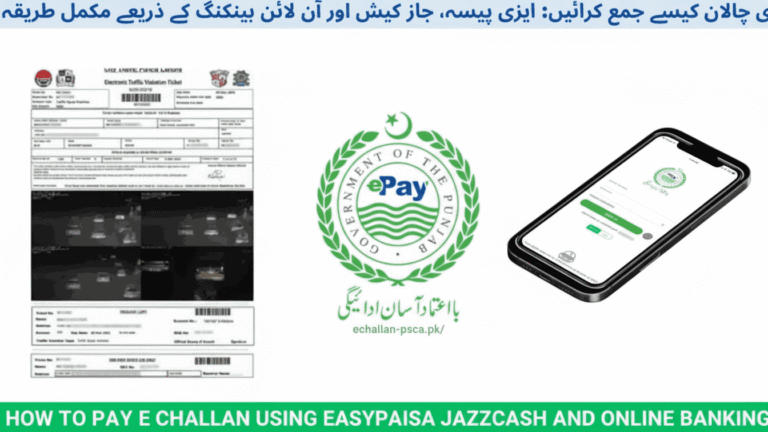
The system displays all pending violations showing challan dates, exact times, precise locations with GPS coordinates, violation types, and applicable fine amounts. Most entries include photographic evidence captured by enforcement cameras showing your vehicle committing the documented violation, providing transparency about enforcement accuracy.
Download challan PDFs containing complete violation details, payment instructions, and deadline information. These documents serve as official records useful for contesting erroneous charges or providing payment proof after clearance.
Payment Channel Options
Karachi’s e-challan payment infrastructure supports multiple convenient channels eliminating excuses about accessibility. Mobile wallets including JazzCash and Easypaisa process payments instantly through their respective apps by selecting traffic challan options and entering vehicle numbers.
Banking applications from major financial institutions integrate Sindh Police challan payments under bill payment sections. ATM payments work through 1-Link enabled machines where you select government payments and navigate to traffic fine options.
Physical payment centers operated at major traffic police stations accept cash payments during business hours for those preferring traditional methods. However, digital channels provide instant confirmation and immediate database updates preventing delays that sometimes occur with manual processing.
High-Enforcement Zones
| Area | Primary Violations | Camera Density |
|---|---|---|
| Shahrah-e-Faisal | Overspeeding, lane violations | Very High |
| Clifton/DHA | Parking, signal jumping | High |
| University Road | Overspeeding, helmet | High |
| Saddar | Wrong parking, one-way | Medium |
| North Nazimabad | Signal, helmet | Medium |
Understanding these enforcement hotspots helps you maintain extra vigilance in areas where violations most commonly occur and where authorities concentrate monitoring resources.
Dispute Resolution Procedures
Despite automated system accuracy, occasional errors occur requiring formal dispute mechanisms. Contact Sindh Police traffic helpline reporting incorrect challans with your vehicle number, challan reference, and explanation of the error. Submit photographic evidence proving your vehicle couldn’t have committed the violation, such as dashcam footage showing different locations at violation times.
Visit traffic headquarters filing formal complaints with supporting documentation. Processing typically requires 7 to 14 business days during which challan payment deadlines extend automatically preventing penalties for disputed charges under investigation. Stay updated on enforcement policy changes and new camera installations through traffic authority announcements covering Sindh’s evolving digital enforcement infrastructure.
Frequently Asked Questions
Do fine amounts increase for repeat violations?
Yes, Sindh Police maintains violation histories with repeat offenders facing escalated penalties sometimes reaching double base amounts for identical infractions within short timeframes.
Can I pay challans in installments?
No installment options exist for standard traffic fines. Full payment within 15-day deadlines prevents additional late penalties from accumulating.
What happens if I ignore e-challans completely?
Unpaid challans prevent vehicle registration renewals, token tax payments, and ownership transfers. Police can also impound vehicles with significant outstanding fine accumulations.
Are camera-detected violations disputable?
Yes, but you need compelling evidence like GPS logs, dashcam footage, or proof your vehicle was elsewhere during violation times since photographic evidence strongly supports issued challans.
Do tourists and visitors get the same fines?
Absolutely. Fine structures apply equally to all vehicles operating in Karachi regardless of owner residence or registration province.
How accurate are ANPR cameras in Karachi?
Modern systems achieve 95%+ accuracy rates with misreads typically involving heavily obscured or damaged plates rather than clear standard registrations.
Final Thoughts
Karachi’s standardized e-challan price structure brings much-needed transparency to traffic enforcement, eliminating the uncertainty and inconsistency that plagued manual systems for decades. Understanding these official rates empowers you to budget appropriately, recognize when officers might quote incorrect amounts, and make informed decisions about compliance with various traffic regulations. While nobody enjoys paying fines, the digital system’s fairness and accessibility represent significant improvements over previous enforcement methods that often seemed arbitrary and opaque. Stay informed about current rates, verify any challans through official channels, and maintain compliance to avoid unnecessary penalties that digital monitoring now catches with remarkable consistency across Pakistan’s largest city.