Traffic Challan Fine List Pakistan 2026 – Helmet, License, Overspeeding & Number Plate Rates
Getting pulled over by traffic police or receiving an unexpected SMS about a challan notification can ruin your entire day, especially when you have no idea how much you’ll need to pay. Pakistan’s traffic enforcement has transformed dramatically with automated camera systems now catching violations you didn’t even realize were happening. Understanding current fine amounts helps you budget accordingly and, more importantly, recognize which traffic rules carry the heaviest financial penalties so you can avoid them altogether.
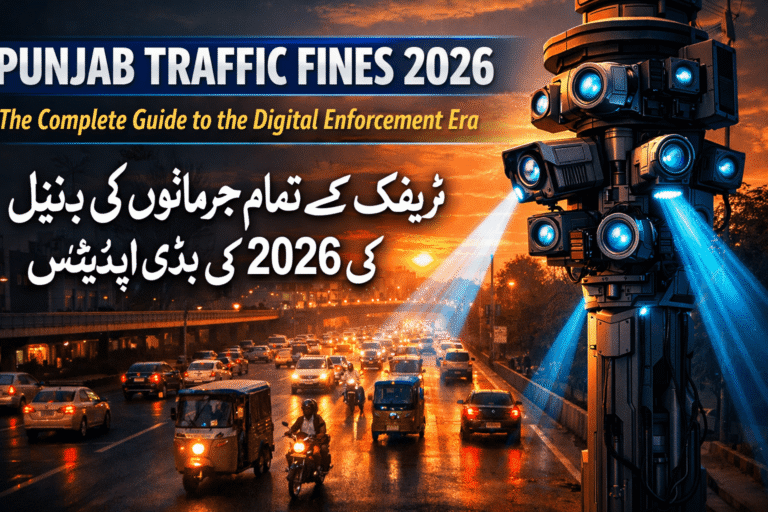
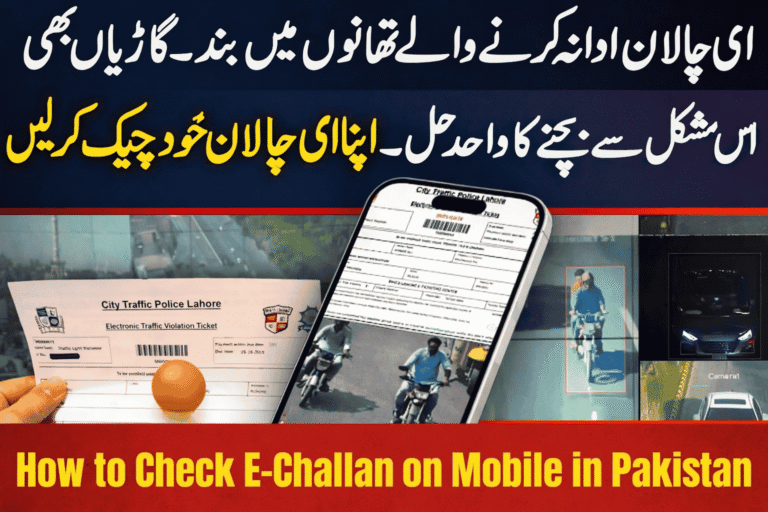
The expansion of Safe City surveillance across major Pakistani cities has fundamentally changed how traffic violations get detected and penalized. Gone are the days when you could talk your way out of a ticket or hope the officer was in a forgiving mood. Cameras automatically capture violations and generate digital challans that arrive directly to your registered mobile number with photographic evidence. Provincial authorities have also revised fine amounts throughout 2026, increasing penalties for dangerous violations while standardizing rates across different regions. Since these automated systems integrate with provincial databases, you can check Punjab traffic fines online immediately after receiving violation notifications to verify amounts and payment deadlines.
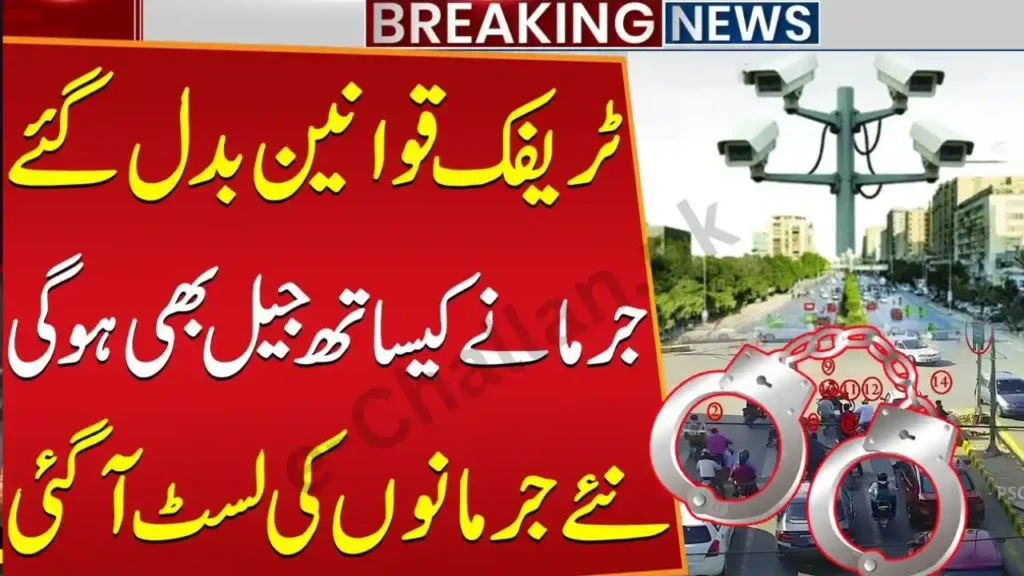
Current Fine Structure Across Pakistan
Traffic penalties vary significantly between provinces and enforcement agencies, reflecting different regional priorities and budgetary considerations. Understanding these variations helps you anticipate costs when traveling across provincial boundaries or using different road networks.
| Violation Type | Punjab | Islamabad | Sindh | Motorway |
|---|---|---|---|---|
| Helmet violation | Rs. 2,000 | Rs. 2,000 | Rs. 1,000 – 1,500 | Mandatory |
| No license | Rs. 2,000 – 5,000 | Rs. 3,000 | Rs. 1,500 – 3,000 | Rs. 5,000 |
| Illegal plates | Rs. 2,000 – 5,000 | Rs. 2,000 | Rs. 1,500 | Not specified |
| Overspeeding car | Rs. 2,000 – 2,500 | Rs. 2,000 – 2,500 | Rs. 1,500 – 2,000 | Rs. 2,500 |
| Red light jump | Rs. 2,000 – 5,000 | Rs. 2,000 – 5,000 | Rs. 2,000 – 5,000 | N/A |
| Mobile use driving | Rs. 2,000 – 3,000 | Rs. 2,000 – 3,000 | Rs. 2,000 – 3,000 | Rs. 3,000 |
These standardized rates apply to most violations caught either through automated systems or manual enforcement, though officers sometimes maintain discretion for first-time offenders in certain circumstances.
Helmet Violations and Enforcement
Motorcycle helmet violations have become one of the most frequently issued challans across Pakistan as camera technology improves at detecting protective gear usage. The relatively high fine amounts reflect government determination to reduce motorcycle fatalities which constitute the majority of traffic deaths nationally.
Punjab and Islamabad enforce the strictest helmet rules with Rs. 2,000 fines applying to both riders and pillion passengers. Safe City cameras in Lahore can detect helmet absence even at high speeds, generating automatic challans without any traffic stop occurring. Sindh maintains slightly lower fines ranging from Rs. 1,000 to Rs. 1,500, though Karachi’s enforcement has intensified considerably during 2026.
Motorways completely prohibit motorcycles without helmets, with National Highway and Motorway Police maintaining zero-tolerance policies. Riders attempting motorway travel without proper protective equipment face immediate stops and mandatory fines before being allowed to continue.
The emphasis on helmet enforcement stems from alarming statistics showing head injuries cause over 60% of motorcycle accident fatalities. Government campaigns throughout 2026 have repeatedly stressed that the fine’s financial pain pales compared to medical costs or permanent disabilities resulting from unhelmeted accidents.
License-Related Penalties
Driving without a valid license carries severe penalties across all Pakistani jurisdictions, with fines varying based on the enforcing authority and violation circumstances. The range spans from Rs. 1,500 in some Sindh areas to Rs. 5,000 on motorways, reflecting different enforcement philosophies.
Punjab traffic police typically impose Rs. 2,000 to Rs. 5,000 penalties with amounts increasing for repeat offenders or commercial vehicle operators caught driving unlicensed. Islamabad maintains a flat Rs. 3,000 fine for most unlicensed driving cases regardless of vehicle type or driver history.
Motorway Police enforce the highest penalties at Rs. 5,000, recognizing that high-speed highway driving without proper licensing poses extreme public safety risks. These elevated fines also apply to expired licenses, with authorities treating lapsed documentation identically to never having obtained licenses at all.
Young riders, particularly students, account for a disproportionate share of unlicensed driving violations. For detailed guidance on license compliance, residents managing vehicles in major cities should regularly monitor Lahore challan records to ensure their documentation remains current and valid.
Number Plate Requirements and Fines
Illegal, fancy, or non-standard number plates trigger some of the most aggressively enforced violations in 2026 as ANPR (Automatic Number Plate Recognition) systems require standardized formatting to function properly. Cameras that cannot read plates due to fancy fonts, tinted covers, or improper mounting automatically generate challans.
Punjab imposes Rs. 2,000 to Rs. 5,000 penalties for number plate violations with amounts varying based on the specific infraction. Completely missing plates or deliberately obscured registrations receive maximum fines, while minor formatting issues might result in lower-end penalties. Islamabad and Sindh maintain similar enforcement patterns with Rs. 2,000 and Rs. 1,500 base fines respectively.
Beyond immediate financial penalties, illegal plates create cascading problems affecting vehicle registration renewals and ownership transfers. Excise departments often refuse processing any transactions for vehicles with outstanding plate violation challans, effectively preventing you from selling or re-registering until you comply with standards and clear fines.
Speed Limit Violations
Overspeeding remains among the most common camera-detected violations as radar systems blanket major highways and urban corridors. Fine amounts depend on vehicle type, location, and how significantly speed limits were exceeded.
Passenger Vehicles: Cars and jeeps face Rs. 2,000 to Rs. 2,500 fines across most jurisdictions with motorways imposing Rs. 2,500 consistently. Extreme speeding, typically defined as exceeding limits by 40+ km/h, sometimes results in doubled penalties or license suspension recommendations.
Motorcycles: Two-wheelers receive slightly reduced fines of Rs. 1,000 to Rs. 1,500 in Punjab and Sindh, though enforcement frequency has increased as camera systems improve at detecting and tracking motorcycles at high speeds.
Commercial Vehicles: Heavy transport vehicles and commercial trucks face substantially higher penalties reaching Rs. 3,000 to Rs. 5,000 on motorways where their excessive speeds pose catastrophic accident risks given their mass and reduced maneuverability.
Signal and Lane Violations
Red light violations attract serious penalties ranging from Rs. 2,000 to Rs. 5,000 across Punjab, Sindh, and Islamabad. Camera systems capture multiple photographs showing vehicles crossing stop lines after signals turn red, creating irrefutable evidence that eliminates dispute opportunities.
Lane discipline violations including wrong-way driving and improper lane usage carry Rs. 1,000 to Rs. 2,000 fines depending on location. Islamabad enforces particularly strict lane monitoring on its organized road grid where marked lanes clearly define proper traffic flow.
Additional Common Violations
| Offense | Fine Amount | Detection Method |
|---|---|---|
| No seat belt | Rs. 1,000 – 1,500 | Camera & manual |
| Mobile phone use | Rs. 2,000 – 3,000 | Primarily manual |
| Pillion no helmet | Rs. 1,000 – 2,000 | Camera detection |
| Illegal parking | Rs. 300 – 1,000 | Manual/photo |
Seat belt violations now get detected through advanced camera systems that can identify whether front-seat occupants wear restraints, generating automatic Rs. 1,000 to Rs. 1,500 challans. Mobile phone usage while driving carries Rs. 2,000 to Rs. 3,000 penalties with motorway fines reaching Rs. 3,000, though detection remains primarily manual rather than automated.
Camera Versus Manual Enforcement
Understanding the distinction between automated camera challans and manual officer-issued tickets helps you anticipate how violations get processed and whether any discretion exists.
Automated camera systems operate with absolute consistency, photographing violations, matching registrations to owner records, and generating challans without human intervention. These digital fines include photographic evidence making disputes difficult unless cameras genuinely malfunctioned or captured wrong vehicles. Officers cannot waive camera challans regardless of circumstances since systems automatically upload violations to central databases.
Manual enforcement by traffic officers allows some discretion, particularly for first-time offenders with minor violations. Punjab traffic police occasionally issue warnings instead of formal challans for helmet violations when stopped riders demonstrate genuine forgetfulness rather than deliberate disregard. However, this leniency never extends to serious violations like unlicensed driving or reckless behavior endangering others.
Enforcement Intensification Factors
Several converging trends have driven stricter enforcement and higher violation rates throughout 2026. Student accident rates, particularly among unlicensed young riders, have prompted targeted crackdowns near educational institutions and residential areas. Number plate fraud cases increasing identity theft risks and challan evasion have triggered automated system expansions prioritizing plate legibility.
Government road safety initiatives receiving international funding have enabled technology investments expanding camera coverage to previously unmonitored areas. Provincial traffic departments now coordinate enforcement strategies sharing violation data and best practices that standardize approaches across regions. Stay current with evolving enforcement priorities through traffic authority updates announcing new camera installations and regulatory changes.
Frequently Asked Questions
Do fine amounts increase for repeat violations?
Yes, many jurisdictions impose escalating penalties for repeated similar offenses within short timeframes, sometimes doubling base fine amounts for habitual offenders.
Can I negotiate challan fines with traffic police?
No negotiation exists for camera-generated e-challans. Manually issued tickets occasionally allow discussion during traffic court hearings if you believe citations were incorrectly issued.
How long do I have to pay traffic fines?
Most challans require payment within 15 to 30 days. Overdue fines accumulate additional penalties and eventually prevent vehicle registration renewals.
Are fine amounts different for commercial vehicles?
Yes, commercial vehicles typically face 50% to 100% higher fines for equivalent violations compared to private vehicles due to increased public safety responsibilities.
Can unpaid challans affect my license renewal?
Absolutely. Licensing authorities verify clearance of all outstanding traffic fines before processing any license renewals or new applications.
What happens if I can’t afford to pay my challan immediately?
Contact the issuing authority about payment plans. Some jurisdictions offer installment options for large fines, though policies vary significantly between provinces.
Final Thoughts
Pakistan’s traffic fine structure in 2026 reflects a government serious about road safety and willing to enforce compliance through financial penalties and technological surveillance. Understanding these fine amounts helps you make informed decisions about which violations carry the greatest costs, both financially and in terms of safety risks to yourself and others. While some might view increased enforcement as inconvenient or excessive, the underlying goal remains reducing the thousands of preventable traffic deaths occurring annually across Pakistani roads. Compliance with traffic regulations isn’t just about avoiding fines but contributing to safer roads for everyone sharing the infrastructure.